
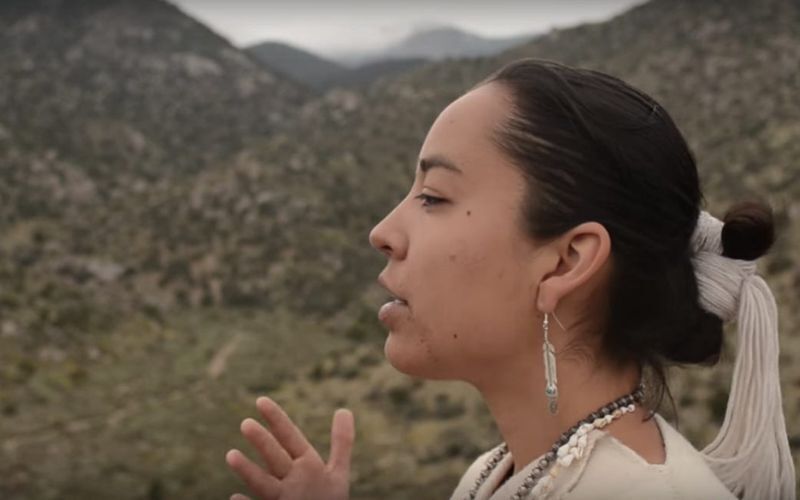
by Dr. Lyla June Johnston
Date: Wednesday, April 22 @ 10:30 AM PDT
Check your local times using this date/time converter.
Cost: Suggested donation $10 US.
While we provide an option to attend this webinar for free, as a nonprofit we depend on donations and your contribution is greatly appreciated!
This Global Read is an unusual—and profoundly important—offering. Together, we will explore the groundbreaking Ph.D. dissertation of Dr. Lyla June Johnston, titled Architects of Abundance: Indigenous Regenerative Food and Land Management Systems and the Excavation of Hidden History.
Dr. Johnston has generously granted participants full access to her thesis so that we may engage deeply with the research, insight, and analysis that reveal how Indigenous communities have long cultivated systems of regeneration, resilience, and ecological harmony. This Global Read invites us not only to learn from her work, but to be in conversation with Dr. Johnston herself as we examine histories too often buried and possibilities urgently needed for our collective future. Pre-Columbian and contemporary Indigenous Nations of North and South America (hereafter referred to as Turtle Island and Abya Yala) have managed ecosystems extensively to produce prolific and predictable food systems for themselves and non-humans, whom they often view as relatives. The elements of earth, water, fire, and air are explored to analyze Indigenous soil management, Indigenous aquaculture, Indigenous pyrogenic land management, and Indigenous oral histories, respectively.
First, a review of four Indigenous societies and their soil management techniques revealed that none of these systems require outside fertilizer or irrigation to sustain ecocentric food systems on millennial scales.
Second, a comparative analysis of six Indigenous fisheries showed how these communities operate on regional-scales, manually augment habitat for key species, are thousands of years old, and are driven by value systems rooted in reciprocity, reverence, respect, restraint, and responsibility to homeland.
Third, an in-depth analysis of fire regime data from a variety of sources indicates that Diné and Pueblo Ancestors did indeed manage the Ch'ooshgai (Chuska) Mountain Range with routine burning during the Holocene epoch and negates theories that these fire regimes were due to lightning ignition.
Fourth, a synthesis of interviews with four contemporary Indigenous land managers confirms that these cultural groups were and are active managers of local ecosystems. Despite coming from different places, all interviewees are driven by a similar set of principles: reverence for the sacredness of life, non-humans are the equal and sacred relatives of humans, and a belief that human groups are divinely assigned to care for their respective homelands.
The next chapter offers an articulation of a theory of Indigenous Regenerative Ecosystem Design (IRED) to support the field and outline potential avenues for future research. The eighth chapter offers policy recommendations based on successful Indigenous food systems for federal, tribal, and nongovernmental agencies to help us effectively address the social and environmental challenges of our times. The ninth chapter proposes that the extent and sophistication of Indigenous food systems were minimized in the historical record precisely because they are living contradictions to the narratives used to legitimize land seizure and attempted genocide. Overall, it was found that most traditional Indigenous communities are not passive observers of nature but are instead influential facilitators of landscape scale abundance, rooted in an ethic of kinship and reverence.
About the Author Dr. Lyla June Johnston
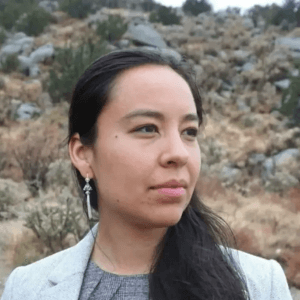
Dr. Lyla June Johnston (Diné/Tsétsêhéstâhese is an Indigenous scholar, community organizer, musician, and environmental advocate whose work bridges ancestral wisdom with contemporary movements for justice and ecological renewal. She holds a Ph.D. in Indigenous Studies from the University of Alaska Fairbanks, where her groundbreaking dissertation, Architects of Abundance, documents the sophisticated regenerative land and food systems developed by Indigenous peoples across the Americas.
Lyla June is internationally known for her powerful blend of poetry, song, and scholarship, weaving together Indigenous science, historical analysis, and spiritual teachings. Her work focuses on food sovereignty, language revitalization, Indigenous governance, and the restoration of traditional ecological knowledge. She has spoken and performed around the world, inspiring audiences to rethink humanity’s relationship with the Earth and with one another.
A passionate advocate for intergenerational healing and Indigenous-led stewardship, Dr. Johnston’s voice continues to shape conversations about climate resilience, cultural survival, and the pathways toward a just and regenerative future.
About the Co-Facilitators

Robin Little Wing Sigo, MSW, is a Suquamish Tribal leader and Director of the Suquamish Foundation. After obtaining her MSW from the University of Washington in 2006, she ran the Suquamish Tribe Wellness Center and provided mental health counseling, specializing in dual-disorders and complex trauma. She left this work to serve as Principal Investigator of the Healing of the Canoe research project for 10+ years. She has four children, and considers herself an aunty to children, plants and animals. You’ll usually find her helping others tell their stories, fighting for justice, and petting cats.
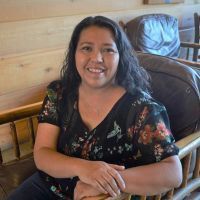
Albie Lawrence is Tlingit, Tsimshian and Filipino, she is Killer Whale Clan from Metlakatla and an enrolled member of the Central Council of Tlingit and Haida Indian Tribes of Alaska. Albie has been married to Nigel Lawrence since 1998 and they have three beautiful children and one adorable granddaughter. Albie received her BSW from Eastern Michigan University in 2009 and her Masters of Social Work from the University of Washington in 2011. Albie is an experienced grant writer and program developer and has been a part of the Healing of the Canoe team since 2009 as a facilitator and trainer.