
Page 6 - Composting is more effective –– and more fun –– as a community
In 2009, Tim Bennett wanted to start composting his food waste –– an inconvenient dream for a 27-year-old apartment dweller in one of the densest parts of Philadelphia. The city doesn't collect organic waste for composting, so he decided to take matters into his own hands.
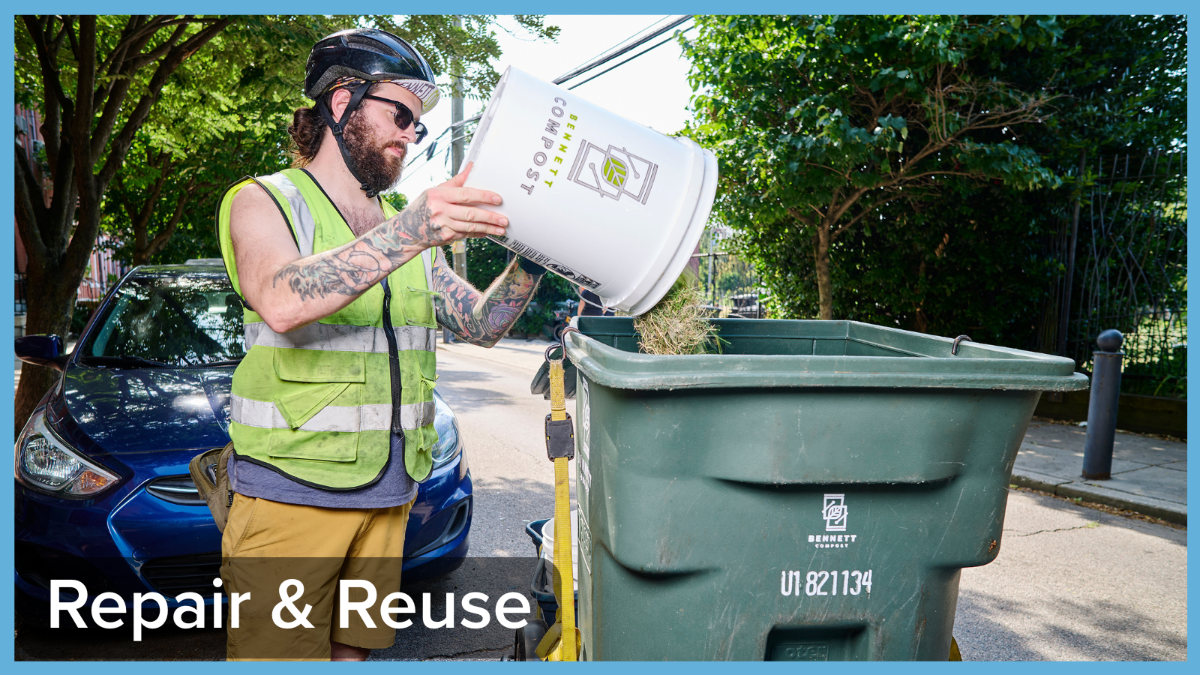
"When you throw things away, they just disappear like magic. But they don't really disappear –– they go to a landfill," says Bennett. In the U.S., food is the most common material sent to landfills, making up almost a quarter of municipal solid waste. It’s responsible for 58 percent landfill methane emissions, which have 80 times more global warming potential than carbon dioxide on a 20-year timescale.
Composting not only neutralizes these impacts, it reverses them. During composting, microorganisms transform organic waste into a slow-release fertilizer that increases soil’s resilience to extreme weather events and helps it store more carbon.
Bennett’s idea was simple: for a small fee, he would collect his neighbors’ food scraps and turn them into compost. He connected with someone starting an urban garden and set up a composting system in a corner of the plot, paying “rent” for the space in compost. With $100 of start-up capital, he bought a couple of five-gallon buckets for scrap collecting, rented a pickup truck for two hours per week at a cheap night-time rate, and printed a stack of flyers to hang in local coffee shops. "I thought it probably wouldn't work, but I'd learn a lot," he recalls.
But orders started trickling in, and today Bennett Compound picks up food scraps from 6,500 households in Philadelphia, diverting over 150 tons of food waste from landfills each month. Bennett’s clients are no longer just residents –– his enterprise works with local businesses, public schools, rec centers and the Philadelphia Department of Prisons.
His business is part of the Community Composter Coalition, organized by the U.S.-based nonprofit Institute for Local Self-Reliance. The coalition brings together over 400 community composting initiatives, everything from schools, urban farms and small-scale neighborhood efforts to well-oiled citywide enterprises.
There are many ways people can get involved in composting on an individual level, from setting up a worm bin in their apartment or a compost tumbler in the backyard, to lobbying public officials to start a compost program, says Bennett.
Composting as part of a community does more than simply turn waste into a resource. It supports local food resilience, creates green jobs, provides opportunity for education and brings people together around a tangible shared goal. "You can't do composting online," laughs Bennett. "A lot of good things can come out of those conversations when you're standing next to somebody, just turning the compost pile.”
To get started, Bennett suggests connecting with other community initiatives that might have some outdoor space to spare, like urban gardens. He also credits partnering with other like-minded local projects for the long-term success of this business. "We had to do it because we didn't have the money to do it on our own," he says. "But it made us better at what we do, and it made us do it in a way that was respectful of the neighborhoods we were operating in.”
See more:
The Institute of Local Reliance
US Environmental Protection Agency