

Page 7 - Floating Data Centers in the Netherlands and Elsewhere Signal a New Era of Sustainable Digital Infrastructure
As global demand for data storage and processing accelerates — driven by cloud computing, streaming media, and the explosive growth of artificial intelligence — the physical footprint of data centers has become a growing challenge. Land-based facilities face mounting constraints: limited space, water scarcity, grid congestion, long permitting timelines and rising community opposition. Against that backdrop, a once-niche concept is moving rapidly into the mainstream conversation: floating data centers
In a significant step toward greener digital transformation, the Netherlands is pioneering an innovative model of floating data centers built directly on its extensive network of canals and waterways. This approach is reshaping how cities can balance rapidly growing data demands with environmental sustainability.
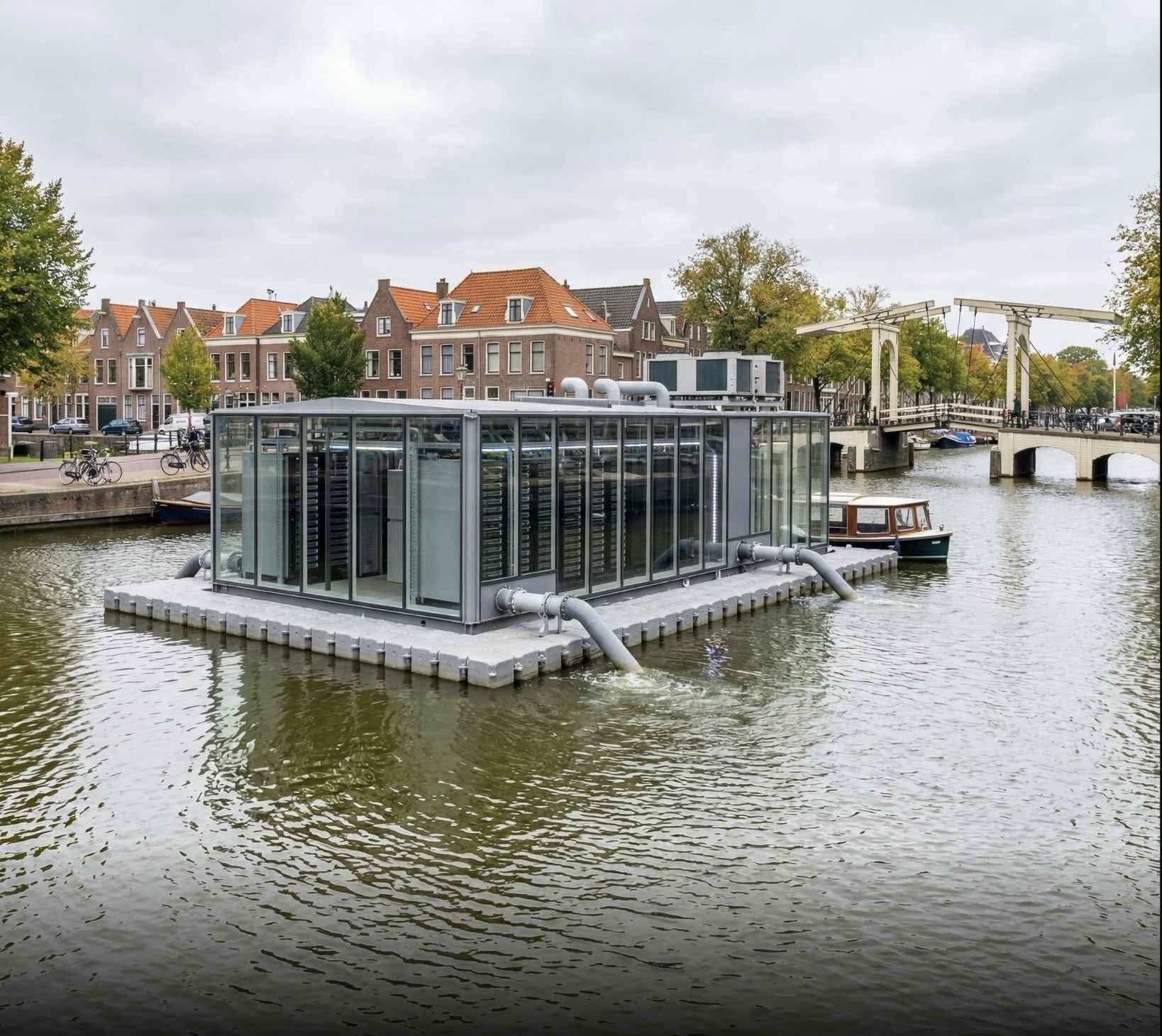
Traditionally, data centers-critical facilities powering cloud computing, storage, and global digital services-are among the most energy-intensive infrastructures, largely due to their dependence on air-conditioning systems for cooling. However, the Dutch model introduces a natural alternative: water-based cooling.
By situating data centers on floating platforms, operators are able to harness the surrounding canal water as a cooling resource. Through advanced heat exchange systems, cool water is circulated within the facility to absorb the heat generated by servers. The warmed water is then released back, effectively dissipating heat without the need for high-energy mechanical cooling systems. This process significantly reduces electricity consumption, operational costs, and associated carbon emissions.
Beyond environmental benefits, the innovation addresses another pressing urban challenge-land scarcity. In densely populated cities such as Amsterdam, where space is limited and expensive, utilizing waterways allows for the expansion of digital infrastructure without competing for valuable land resources. Floating data centers thus represent a dual solution: optimizing space while improving sustainability.
Experts suggest that this model could serve as a blueprint for other water-rich cities worldwide, especially as global data demand continues to surge with the growth of artificial intelligence, cloud computing, and smart urban systems.
The Netherlands’ approach underscores a broader shift in infrastructure thinking-where nature-based solutions and technological advancement converge. By reimagining how and where data systems operate, it demonstrates that even the backbone of the digital economy can be redesigned to align with climate goals.
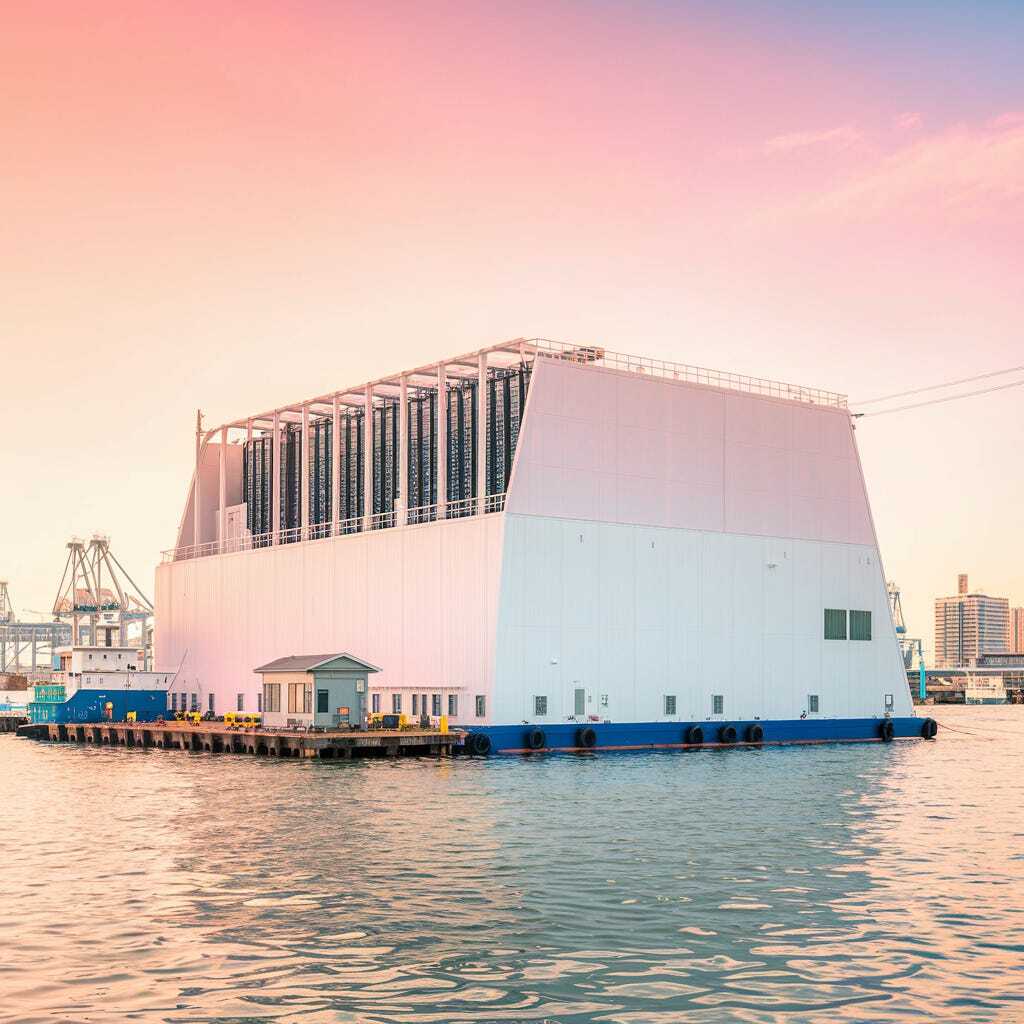
Japanese floating digital center
As countries worldwide seek to decarbonize their economies, such innovations offer a compelling example of how sustainable engineering can transform high-energy industries into environmentally responsible systems.
“We’re seeing baseline (increases in) requests,” said Mike Complita, Principal in Charge and Vice President of Strategic Expansion at Elliot Bay Design Group. “Once AI comes into play, that jumps even higher.” At those scales, floating data centers are no longer single platforms but modular fleets — multiple barges operating together, offering scalability unmatched by land-based construction. “That scalability is another big advantage,” Complita said. “You don't have to build everything at once. You can grow as demand grows.”
While floating data centers remain a small slice of the global data infrastructure today, momentum is clearly building. What was once an experimental concept is now drawing serious interest from major players in both the technology and maritime sectors.
“For a long time, this was a curiosity,” Complita said. “Now it’s something companies are looking at strategically to get ahead of their competitors.” For shipyards, designers, and marine equipment suppliers, floating data centers could represent an interesting opportunity: a high-value, technology-driven market that leverages core maritime expertise while opening the door to a rapidly expanding digital economy.
As data demand continues to surge, the question may no longer be whether floating data centers make sense, but how quickly the maritime industry is ready to deliver them.
from Kathmandu | Ecosphere News
#EcosphereNews #SustainableTechnology #GreenInfrastructure #ClimateInnovation #DataCenters #Netherlands #CircularEconomy #UrbanSustainability #CleanEnergy #DigitalTransformation
and from MarineLink, Thursday, April 16, 2026