
Page 5 - Baby Massage: Centuries Old, Supported by Science
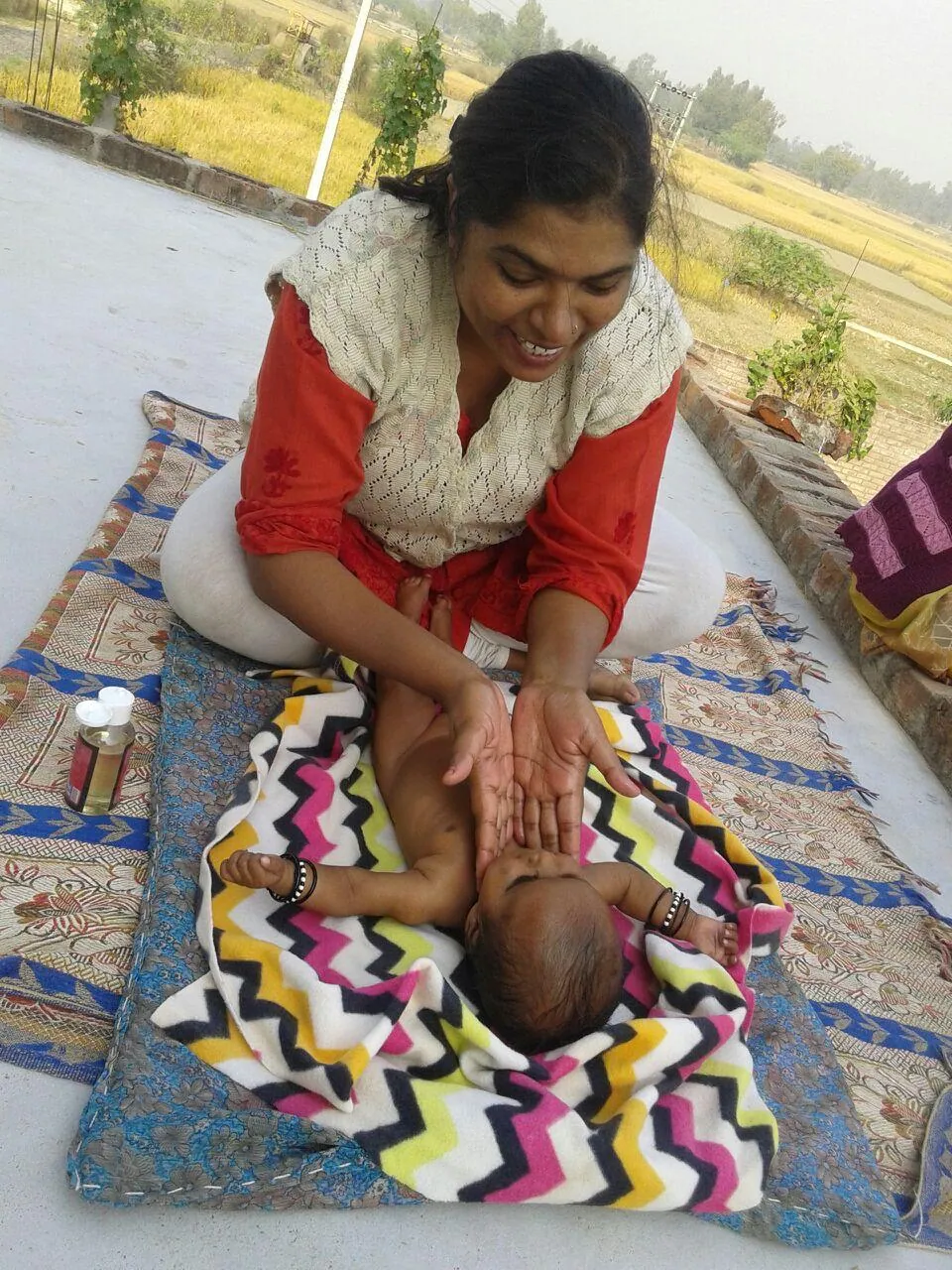
In a small village in Uttar Pradesh, Sarita Devi sings to her newborn grandson. Sitting on the ground with the infant nestled into her lap, the 56-year-old massages him with oil from her kitchen. He yawns as she gently stretches his legs and massages around the umbilical cord. Finally, she wraps him in a blanket and he goes to sleep in the sun.
In fact, the world over, caregivers massage newborns using a variety of techniques and oils. The Chinese believe that massage harmonizes yin and yang in newborns and promotes long life, wisdom and inner calm, while Latin American mothers believe it wards off the “mal de ojo”, or the evil eye. The Inuit massage seal oil to make the newborn more resilient to their harsh winters, while some African communities believe that a well-massaged baby will be smarter, stronger — and even more fertile — in adulthood.
Modern science also suggests massage benefits newborns, although it’s important for caregivers to consult with a paediatrician before making massage a part of infant care.
“The literature on early childhood development suggests that every aspect of this traditional massage can be beneficial,” says medical research scientist Vishwajeet Kumar, founder of Community Empowerment Lab in the north Indian state of Uttar Pradesh. “When you massage a baby, the oil lubricates the skin and relaxes the muscles. You stimulate the skin, make eye contact and maybe even sing a song, or tell a story. In short, you engage all the baby’s senses and this is crucial for development.”
A review of 11 studies on massage therapy’s potential for growth and development among infants under nine months found that it can impact everything from body weight and length to speech and visual-motor coordination. Newborn skin plays a crucial role as a barrier to infections and in preventing heat and water loss, but it is thinner and more permeable than adult skin and can take up to 12 months to mature. Oil massage can prevent skin dryness, to which newborns, freshly out of an ultra-moist womb, are especially vulnerable. Some of the oil is absorbed by the skin and into the bloodstream, adding to the infant’s nutrition. Other studies show that infants who are massaged sleep better and remain more alert while awake. Moreover, massage is potent touch therapy, which enhances the mother-baby bond, relieves colic and other pain, and can even prevent or reduce postpartum depression.
Despite so many proven benefits and having been around for centuries, oil massage, or emollient therapy of newborns, has entered mainstream medical discourse only recently. In the last three decades, medical researchers have been determining what safe newborn massage looks like and identifying the parameters under which it works most optimally.
Darmstadt questioned the use of any easily available oil for infant massage. “There seemed to be kind of a belief that any oil would do … And they were mostly using oils pulled off the shelf of a local store or oil press,” he says.
This inspired his three-decade quest to tweak tradition using evidence-based science to codify protocols for infant oil massage and find the optimal oil for it. “I brought back samples of oil from South Asia — mustard, olive, soybean, corn and sunflower seed oil to study,” he says. His research identified one oil that moisturized infant skin, kept it hydrated for long periods, and even reduced sepsis and neonatal mortality rates of hospitalized premature infants: Sunflower seed oil (SSO).
The magic ingredient that sets SSO apart from other oils is linoleic acid. It’s an essential fatty acid that humans do not produce, but its effects on skin health are well documented. “We realized using this oil could potentially accelerate the development of the skin, especially in preterm babies,” Darmstadt says. So with a team of researchers including Kumar, he conducted a community-level clinical trial with over 26,000 infants (full-term and pre-term) to investigate the effects of SSO therapy with traditional massage practices. The study found no significant difference in neonatal mortality rates overall, but recorded a 52 percent reduction in neonatal deaths among very low-birth-weight infants who received SSO therapy, compared to those who received mustard oil massages.
The results were inconclusive, owing in part to the fact that in a community-based trial, with many infants being taken care of at home, researchers were not able to control the massage practices followed. In fact, merely 30.4 percent of the intervention group reported using sunflower seed oil exclusively, as per the design of the study. But based on its results and further research, in 2022 the World Health Organization concluded that emollient therapy could be considered for the treatment of preterm or low-birth-weight babies, although it called for additional research on its effects, dosing and mode of application.
Jain is presently conducting a clinical trial in her NICU that compares the outcomes of simple oil (mostly coconut) application with those of a standardized massage in preterm babies. Consequently, her NICU holds training sessions in newborn massage for parents and caregivers participating in the trial. Her team has also developed posters with visual step-by-step instructions for massage.
The trial will continue until early 2026, but Jain’s clinical observations so far suggest that babies who have been massaged are gaining weight faster than the ones in the control group on whom the oil is simply being applied. She says that massage might be reducing their stress, which in turn could be helping them to sleep and feed better. Moreover, parents who have been trained to massage their tiny preemies feel good, she notes, and “are able to connect with the child more.”
Back in the sleepy village in Uttar Pradesh where Devi lives, her grandson wakes up with a loud wail. She croons to him, gently massaging his stomach “to ease colic pain,” she says. The baby promptly goes to sleep.
“Massage works,” she says, “but people say my hands have magic in them!”
Additional informational about infant massage: (Please consult with your pediatrician before making massage a part of your daily routine)
Infant massage is a gentle and soothing practice that can provide numerous benefits for babies.
Benefits
- Promotes relaxation and sleep: Massage can help calm babies and prepare them for sleep.
- Relieves gas and constipation: Gentle strokes on the abdomen can help stimulate digestion and reduce gas.
- Improves circulation: Massage can enhance blood flow throughout the body, promoting overall health.
- Strengthens bonding: Massage provides a nurturing and intimate experience between parent and child.
- Supports cognitive and emotional development: Touch is essential for early brain development and can foster a sense of security and well-being.
How to Perform
- Choose a comfortable environment: Make sure the room is warm and quiet.
- Use a gentle oil: Opt for a baby-safe oil, such as olive oil or coconut oil.
- Start with the feet: Gently stroke the feet and toes, moving upward towards the legs.
- Continue to the legs: Massage the legs in a circular motion, working from the hips down to the feet.
- Massage the chest and back: Use soft strokes on the chest and back, avoiding the spine.
- Massage the arms and hands: Gently rub the arms and hands, paying attention to the fingers and palms.
- Massage the face: Use very light strokes on the face, around the eyes, nose, and mouth.
- Follow the baby's cues: If the baby seems uncomfortable or fussy, stop the massage.
Tips
- Use light pressure and avoid harsh movements.
- Pay attention to the baby's body language and adjust your techniques accordingly.
- Make eye contact and talk to the baby during the massage.
- Engage with the baby by singing, reading, or playing soft music.
- Enjoy the bonding experience and make it a regular part of your routine.
Frequency
You can massage your baby daily or as often as they enjoy it. However, avoid over-massaging, as it can be counterproductive
- Touch A Parent’s Guide to Infant Massage
https://homevisitingtraining.umbc.edu/sites/default/files/2021-10/Infantmassage.pdf