
College Students Reduce Smart Phone Usage and Start a Movement
There was no way around it: Charlie Fisher was addicted to his smartphone. He scrolled on Tik Tok and Instagram first thing in the morning, picked it up to answer text messages between classes and relied on it as a crutch in social settings. “It was a “never ending pattern.”
“It got to the point where I didn't even know what being present was,” Fisher says. “Someone said flip phone. I was like, 'Wait, you can do that?'"
He bought a $20 Nokia flip phone from Walmart with a $6 per month plan. For a year, he waffled between his smartphone and the flip phone until he fully ditched his smartphone in March.
Seán Killingsworth, 22, had long noticed that his peers’ interactions were impacted by the smartphones in their pockets. He coined the term a “social wasteland” to describe the “zombies” around him who were unavailable for social connection.
Sean got a flip phone his sophomore year of high school. Whenever a new friend asked for his Snapchat, the conversation would quickly come to an awkward halt after he explained he had a flip phone. When he tried to call people – texting on his flip phone’s keyboard was tedious – it was anxiety inducing or off-putting for his peers, who often stopped reaching out.
When he enrolled in school at the University of Central Florida, Sean wanted things to be different, and started hosting casual get togethers with friends. Eventually, the idea turned into the Reconnect Movement (reconnect movement.org), which has clubs at Rollins College, the University of Florida and the University of Central Florida. Another chapter is on tap to launch at Simpson College in Iowa this fall.

Seán Killingsworth started the Reconnect Movement at Rollins College to create a phone-free space for Gen Z to meet face-to-face. Events include activities like hiking, painting, yoga and thrift swaps. The club has since spread to other campuses. Here, students pose for a photo at the University of Central Florida.
The events involve activities like painting, playing outdoor sports or hosting lighthearted “goofy debates” where students argue over topics like mountains vs. the beach. Many times, though, the event at hand morphs into an afternoon where everyone just hangs out.
“It’s a way to see and be able to experience what is possible when just connecting with a group of people for no reason and just hanging out purely to hang out,” Killingsworth says. “That doesn't really happen anymore, because everything's so facilitated and planned out by technology.”
***
How Smartphones Impact the Young Brain
Addiction spans devices and platforms and is most heavily tied to algorithms that feed curated content to users, according to Digital Literacy expert Kaitlyn Regehr, who is the author of “Smartphone Nation.”
A combination of factors – the refresh screen, the device’s color saturation, notifications and prompt system – impact how the addiction functions.
Child psychiatrist and Yale School of Medicine professor Yann Poncin says smartphones impact the brain in three key ways: impacting productivity and prioritization, depleting the brain’s cognitive patience and threshold for tolerating frustration, and rewiring the brain’s pleasure pathways and dopamine release.
“The natural state of adolescence that is prone to feeling left out, prone to maybe feeling blue, sometimes prone to social anxiety; it is not caused by social media, but it is aggravated by social media,” Regehr says.
Nearly half of teens say they’re online constantly, according to 2024 data from the Pew Research Center (https://www.pewresearch.org/internet/2024/12/12/teens-social-media-and-technology-2024/). And 48% of teens aged 13 to 17say social media has a negative effect on kids their age.
***
In the time since Fisher got a flip phone, he says he’s returned to old hobbies. He’s a musician, and has made more time to play harmonica, mandolin, banjo and guitar. He used to miss details on the screen when he watched movies, but when he watched the 2005 action film “Sahara” this week on vacation, he could vividly remember the details afterwards.
“I've been seeing things more like when I was a kid,” Fisher says. “You really see things for how they are in the physical world, and your emotions are really attached to that.”
Through the Reconnect Movement, Killingsworth has watched his peers come out of their shells. The first meeting started off a little awkward – after all, the students weren’t used to going without their phones. But 15 minutes into the event, he says even the most socially anxious participants were having energetic conversations
“You'd be surprised how many other people are feeling the exact same way you are about social media,” Killingsworth says.
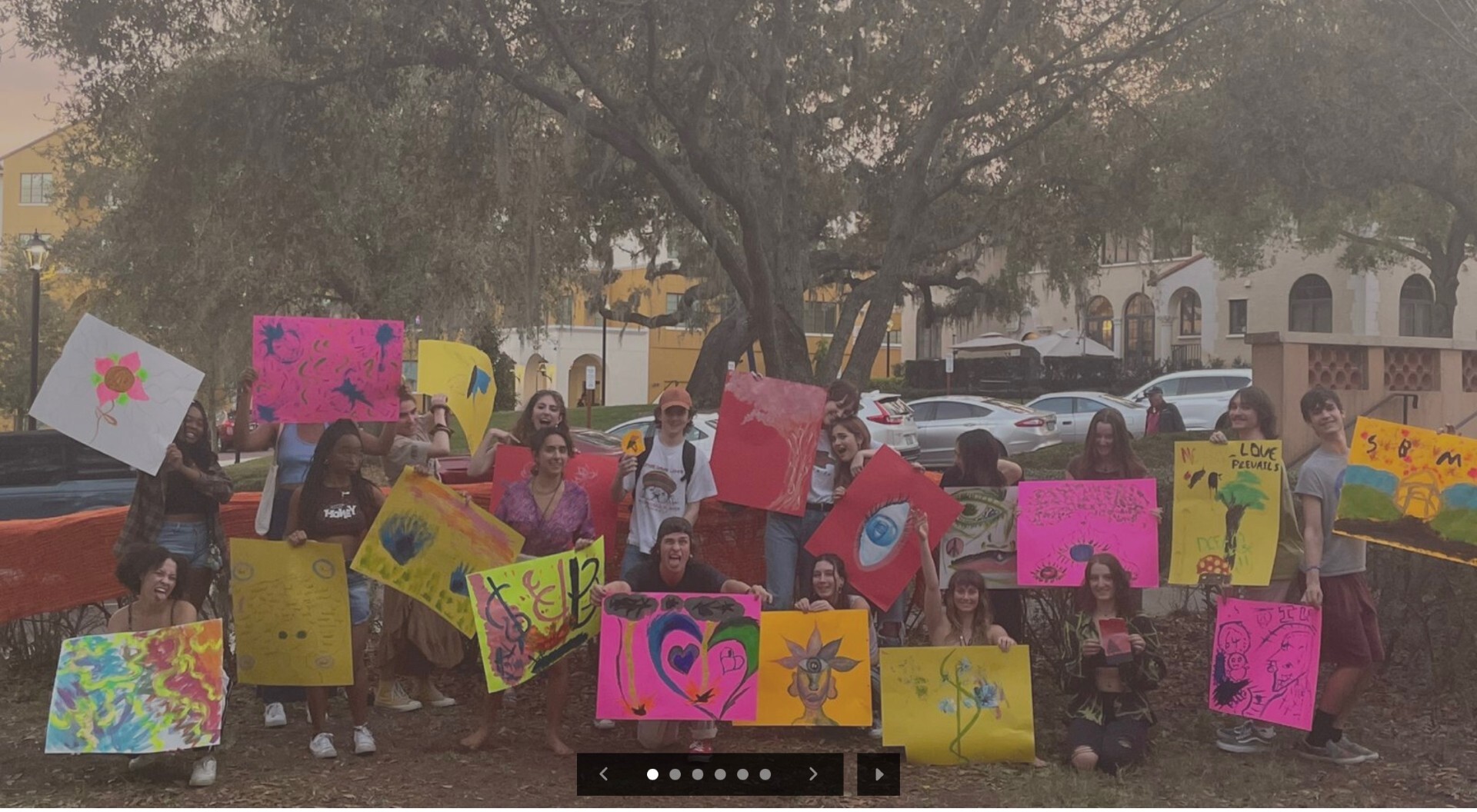
The majority of the club’s members don’t have a flip phone, and Killingsworth acknowledges making the switch isn’t for everyone.
Sammy Palazzolo, a content creator who uses a flip phone part time, says she can’t imagine not having access to Tik Tok, where she regularly posts advice and story time videos to 490,000 followers. But on nights out, she carries her flip phone.
She and two friends purchased the phones during their freshman year after they realized all of the negative experiences they had when going out were tied to their cell phones, whether it was sending a text they regretted or neglecting to be present in the moment.
“These are supposed to be the best moments of our life, but you look around and people are scrolling,” Palazzolo says.
Going cold turkey can be a jolt to the system. Fisher recommends that those looking to make a change start by detoxing their social media and slowly weaning off of their smartphones to adjust to not having services like Google Maps.
Technology does facilitate progress and convenience, but there is a potentially darker side to our all-too-frequent digital-only interactions: loss of privacy, loss of dignity, less frequent face-to-face human contact, more data breaches and security threats.
There is huge concern these days about the potential impact of social media and 24/7 tech use on today’s teens, including linking social media use to technology addiction, the decay of in-person social skills, and multiple harms to kids' mental well-being,” says James Steyer, CEO of Common Sense
This article appeared in USA TODAY: “These college kids are swearing off smartphones. It's sparking a movement”