
Films for Social Justice — An Expanded Introduction
Film is one of our most powerful empathy engines. It lets us inhabit lives unlike our own, witness systems at work, and imagine better ones. In the Justice & Integrity Pillar, we use film to spark courageous conversation, deepen historical understanding, and move audiences from awareness to compassionate action. The selections below span fiction and documentary, classics and contemporary releases, and stories from every region—because social justice is both global and local.
How to use this list:
- Pair a film with purpose. Match titles to themes you’re exploring (policing and incarceration, migration, climate justice, gender equity, labor rights, Indigenous sovereignty, interfaith reconciliation, etc.).
- Host dialogue, not debate. After screenings, use prompts like: What harm is named? Who is missing? What repair looks possible—personally, locally, structurally?
- Balance impact with care. Offer brief content notes; provide resources and actions audiences can take (mutual-aid links, local orgs, restorative practices, reading lists).
- Bridge pillars. Invite collaborators from other pillars—Education & Learning (youth-led circles), Environment (eco-justice films), Music & Arts (artist talkbacks), Spirituality/Love/Hope (healing and reflection practices).
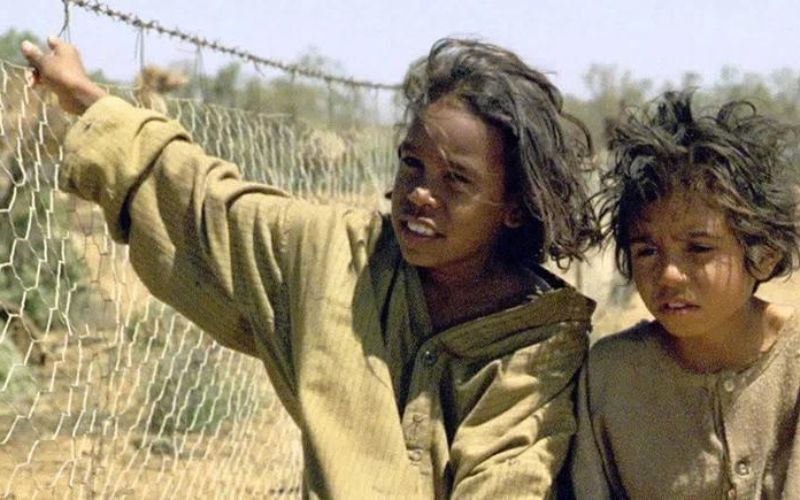
Below are additional recommendations (to complement your existing list of Selma, 12 Years a Slave, Aparajito, La Haine, Caché, City of God, Children of Men, Rabbit-Proof Fence, and The Square). Each includes a brief note to help you program thoughtfully.
Additional Recommended Films by Theme
Civil Rights, Racial Justice & Policing
- 13th (2016, Ava DuVernay) — Documentary on the nexus of race, incarceration, and profit in the U.S.
- Fruitvale Station (2013, Ryan Coogler) — The killing of Oscar Grant; intimate, community-rooted portrait.
- Just Mercy (2019, Destin Daniel Cretton) — Bryan Stevenson’s early work freeing the wrongfully convicted.
- The Hate U Give (2018, George Tillman Jr.) — A teen’s voice amid police violence and community pressure.
- Do the Right Thing (1989, Spike Lee) — Classic on heat, history, and the flashpoints of everyday injustice.
Indigenous Rights & Decolonization
- Moolaadé (2004, Ousmane Sembène) — Women organize against FGM; luminous, community-led resistance.
- Whale Rider (2002, Niki Caro) — Māori girl breaks expectations; tradition, leadership, and belonging.
- Angry Inuk (2016, Alethea Arnaquq-Baril) — Inuit perspectives on hunting, livelihood, and misrepresentation.
- Night Raiders (2021, Danis Goulet) — Dystopian parable rooted in the trauma of Indigenous child removal.
Migration, Refuge & Borders
- Flee (2021, Jonas Poher Rasmussen) — Animated documentary of an Afghan refugee’s journey and identity.
- Fire at Sea (2016, Gianfranco Rosi) — Lampedusa’s front line of the Mediterranean refugee crisis.
- Dheepan (2015, Jacques Audiard) — Sri Lankan refugees navigating violence and dignity in France.
- Human Flow (2017, Ai Weiwei) — Global portrait of displacement and the politics of belonging.
Gender, LGBTQ+ & Bodily Autonomy
- Pride (2014, Matthew Warchus) — Miners and queer activists discover solidarity (true story).
- A Fantastic Woman (2017, Sebastián Lelio) — Trans dignity, grief, and the demand to be seen.
- Mustang (2015, Deniz Gamze Ergüven) — Sisters resist forced conformity in rural Turkey.
- Persepolis (2007, Satrapi/Paronnaud) — Animated memoir of girlhood, revolution, and self-determination.
Labor, Inequality & Economic Justice
- I, Daniel Blake (2016, Ken Loach) — A humane indictment of austerity and bureaucratic cruelty.
- Sorry We Missed You (2019, Ken Loach) — The gig economy’s human cost on one British family.
- Made in Dagenham (2010, Nigel Cole) — Equal pay strike; organizing with grit and humor.
- Parasite (2019, Bong Joon-ho) — Class, precarity, and the architecture of inequality.
- Roma (2018, Alfonso Cuarón) — Domestic labor, class, and care in 1970s Mexico City.
Courts, Prisons & Accountability
- The Central Park Five (2012, Ken Burns et al.) — Wrongful conviction and media power.
- Strong Island (2017, Yance Ford) — A family’s loss becomes a meditation on race and justice.
- The Thin Blue Line (1988, Errol Morris) — A wrongful conviction unraveled by documentary inquiry.
- Collective (2019, Alexander Nanau) — Romanian corruption exposé; journalism as public accountability.
Environment & Climate Justice
- Erin Brockovich (2000, Steven Soderbergh) — Groundwater contamination and corporate responsibility.
- Dark Waters (2019, Todd Haynes) — PFAS scandal; long-haul lawyering for community health.
- Even the Rain (2010, Icíar Bollaín) — Cochabamba Water War; privatization meets people power.
- Honeyland (2019, Ljubomir Stefanov/Tamara Kotevska) — Traditional stewardship challenged by extraction.
War, Memory & Reconciliation
- The Act of Killing (2012) & The Look of Silence (2014, Joshua Oppenheimer) — Perpetrators and survivors of Indonesia’s mass killings; ethics, memory, and truth.
- Waltz with Bashir (2008, Ari Folman) — Memory, complicity, and Lebanon ’82; animated documentary.
- Timbuktu (2014, Abderrahmane Sissako) — Life under jihadist rule; quiet courage and cultural survival.
- Hotel Rwanda (2004, Terry George) — Protection amid genocide; raises hard questions about intervention.
Youth, Schools & Civic Courage
- He Named Me Malala (2015, Davis Guggenheim) — Girls’ education and global advocacy.
- Girl Rising (2013, Richard E. Robbins) — Nine stories of education as liberation.
- The First Grader (2010, Justin Chadwick) — A Kenyan elder pursues primary school; dignity across generations.
- The Class (2008, Laurent Cantet) — A French classroom wrestles with language, power, and belonging.
Urban Margins & Survival
- Capernaum (2018, Nadine Labaki) — A Lebanese boy sues his parents; poverty, law, and childhood.
- Tsotsi (2005, Gavin Hood) — Redemption on the edge of Johannesburg.
- Shoplifters (2018, Hirokazu Kore-eda) — Chosen family questions law, care, and survival.
Programming Tips (quick lift)
- Double-feature contrasts: Pair a documentary with a narrative film on the same theme (e.g., 13th + Just Mercy; Even the Rain + Dark Waters).
- Localize the action: Invite a community org aligned with the film’s issue and end with “three concrete next steps.”
- Restorative frame: Use circle prompts—What harm? Whose needs? What responsibilities? What repair?—to keep dialogue compassionate and practical.
- Access: Offer subtitles, consider audio description when possible, and share content notes upfront.