
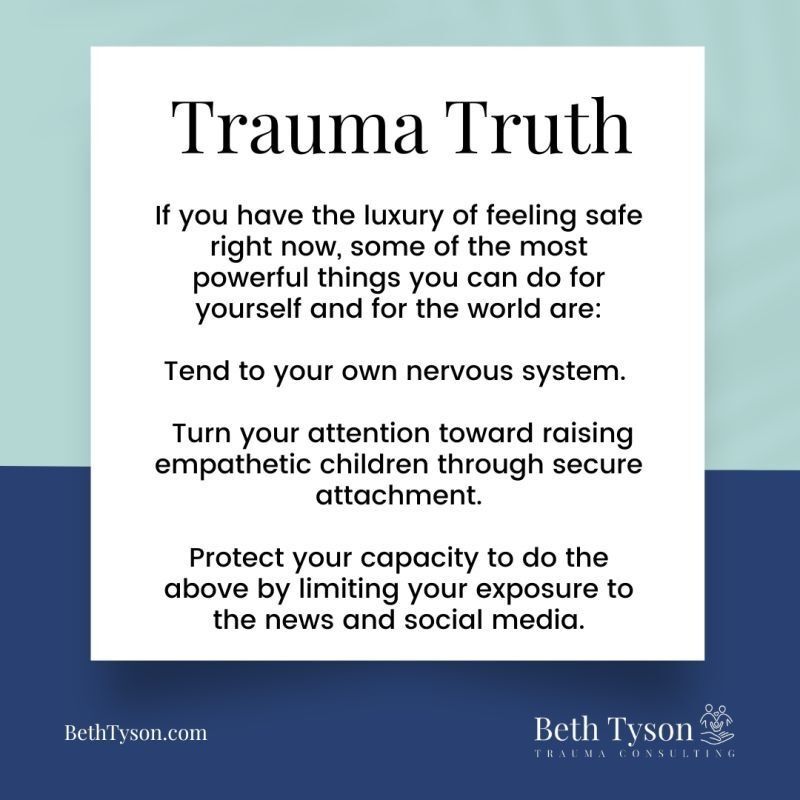
Trauma Truth
Beth Tyson is a childhood trauma specialist and a member of one of the Charter's Healthcare Pillar. In a recent meeting of the group she was asked how do we address some of the current disruptive issues occurring in the U.S. in relation to the presence of ICE agents in our communities. She shared the article below with us.
This post is for people who are physically safe, but feel overwhelmed by the state of the world. If you are in immediate dan.ger, this post likely won't be helpful. I say this so you don't waste your time reading it & instead look for other resources to meet your needs.
If you or the children you care for have a history of trauma or ab.use, your nervous systems are probably VERY activated given the current events in the U.S.
News that is similar to the trauma you or a child endured can trigger old wounds, sending you into hypervigilance, shutdown, or oscillating between both.
These triggers or activations remind us that something feels familiar to a previous unsafe situation, & set off our survival instincts (fight, flight, freeze, fawn, etc.)
While these feelings and emotions are very NATURAL given the circumstances, they make it difficult (and sometimes impossible) to function and relate well with others.
While we can't eliminate all stress, the goal is to stay generally informed while also creating spaces where our nervous system gets to rest so we can show up for our kids somewhat regulated.
Steps that can help:
- Curate your algorithm deliberately. Even if you only click on one post about politics your feed has learned to serve you anxiety. Start liking things that bring lightness, for me it’s witchy posts about nature, babies giggling, artists painting. Last night I went into my feed and clicked the “not interested” button on anything that was stressing me to recalibrate my algorithm.
- Set boundaries with information consumption. Maybe you designate a time each day to check the news, give yourself 20 minutes, and then shut it down. This is your "worry time" each day.
- Notice what grounds you. For me, it’s petting my dog every time I walk by him. For others, it’s making a hot cup of tea (also me), lying on the floor belly down. These are emotional anchors that help us stay steady without drowning.
- Actively seek good news. Scientists are still making breakthroughs. Communities are still showing up for each other. Small acts of kindness are happening every day. The media I follow are Fix the News, Good News Network, and Positive News.
Stay connected to your people. Even if you don't feel like it, give that friend who makes you laugh a call. Five minutes in you will be glad you did, promise. Research shows that connection is the most powerful buffer to trauma & grief.
When Regulation Feels Impossible:
If you notice yourself unable to focus, sleeping too much or too little, feeling numb or constantly on edge, withdrawing from people you love, or using substances to cope, these are signs your system is overwhelmed. Reaching out to a trauma-informed therapist is recommended.
NOBODY can think clearly or act effectively when dysregulated. Right now clear thinking and regulation are privileges we can't afford to lose.