

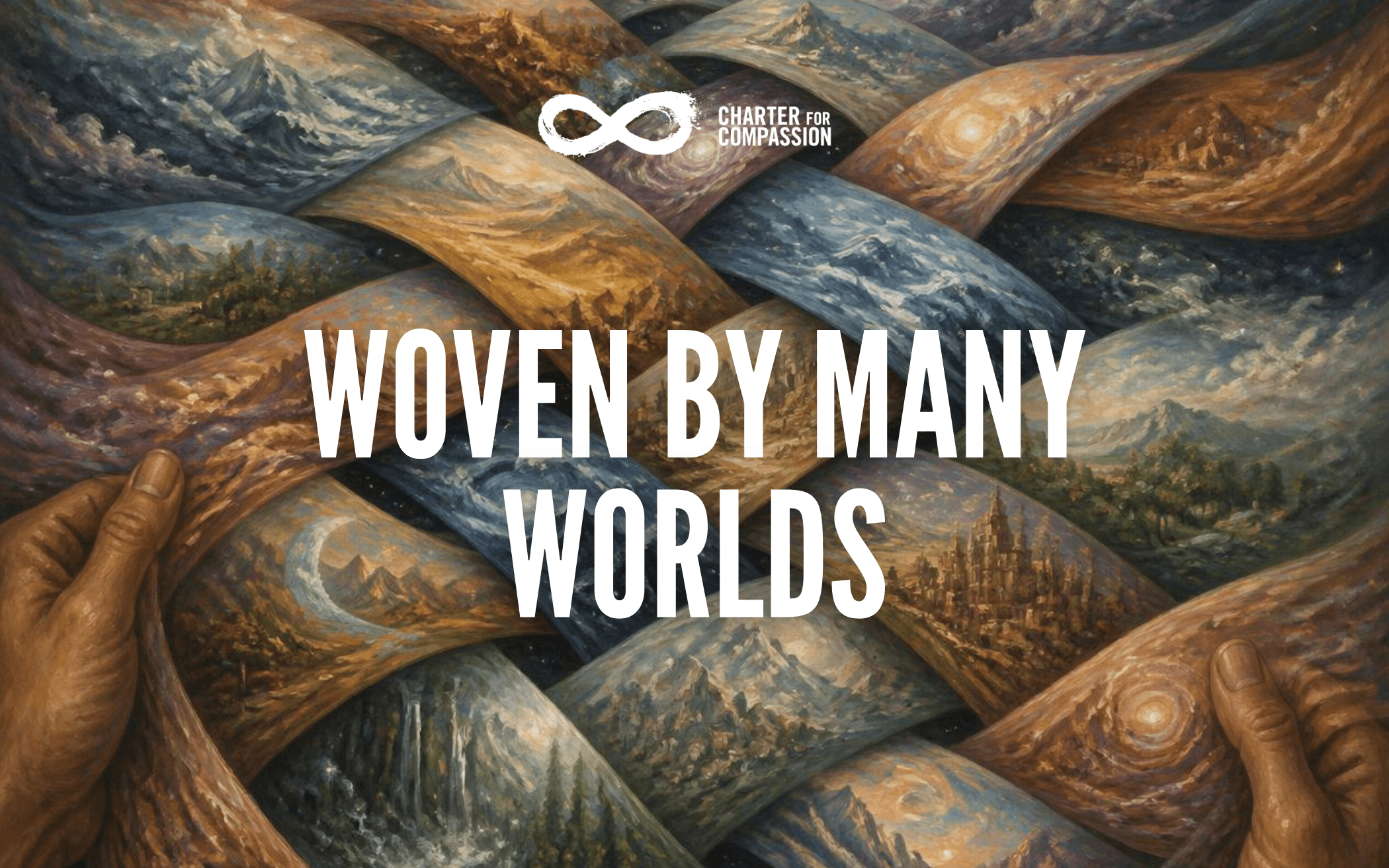
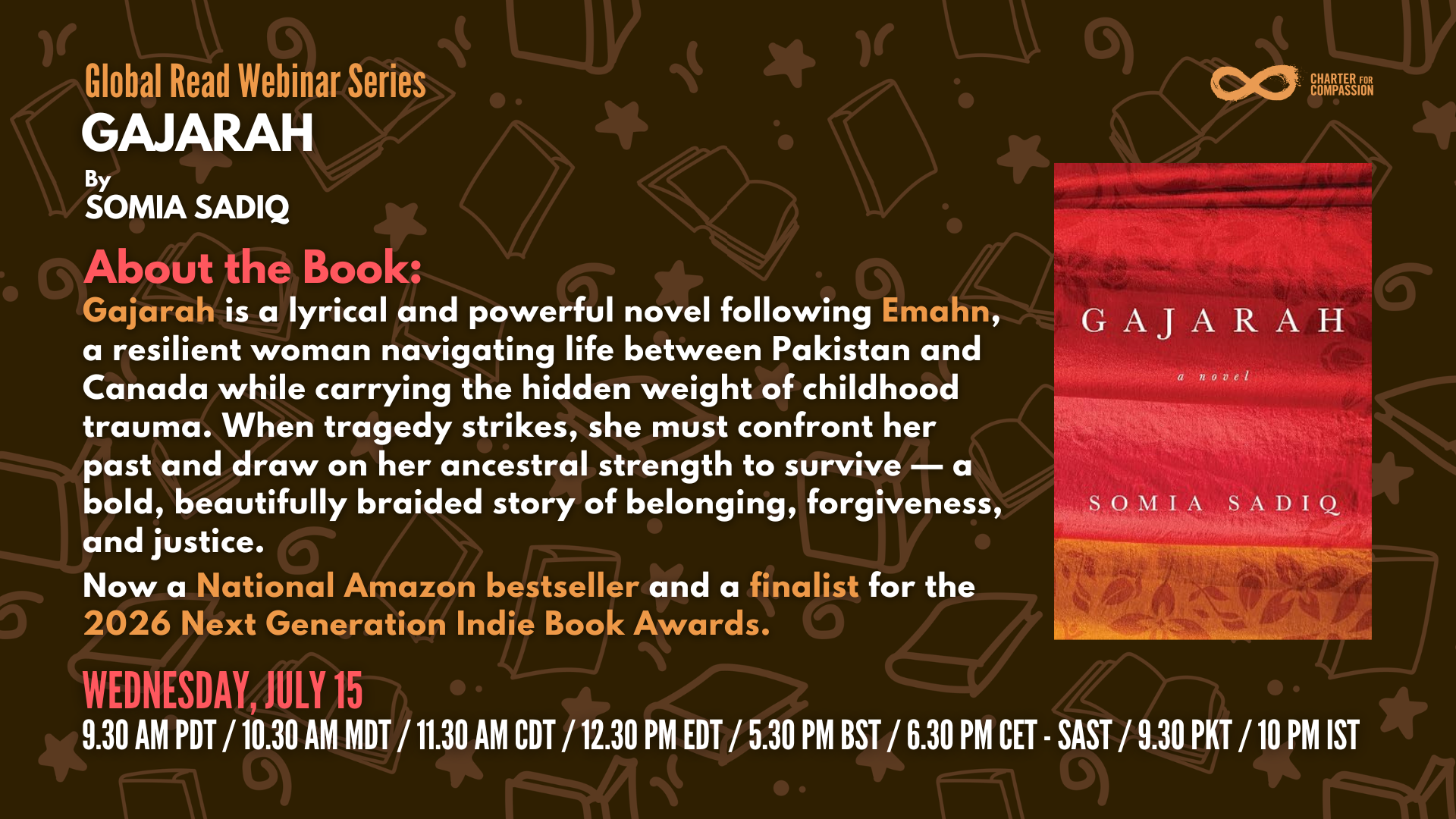
In her debut novel Gajarah, a finalist for the 2026 Next Generation Indie Book Awards, Somia Sadiq weaves together memory, migration, resilience, and belonging into a story that reminds us that compassion is often found in the threads that connect us.

As I began reading Gajarah, I found myself returning not only to its deeply moving story, but to the spaces between its words, the memories, the silences, and the inheritance of both the joy and grief that shape who we become. Through Emahn’s story in Gajarah, Somia beautifully showcases that healing is rarely linear. It is carried in fragments, in family stories told around kitchen tables, in languages that survive migration, in flowers woven into garlands, and in the courage to remember what we might rather forget.
At its core, Gajarah is a novel about what it means to remain whole in a world that can feel so deeply broken. The novel takes its name from a fragrant floral garland (gajarah) traditionally woven from jasmine (motia), rose (gulab), and sometimes marigold (genda). Somia explores migration, trauma, family, memory, and healing with deep tenderness and honesty; interwoven with prose, folklore, and poetry, her storytelling reminds us that resilience is born from learning to carry our past with both courage and compassion, and that our lives are not defined by a single moment or a single place.
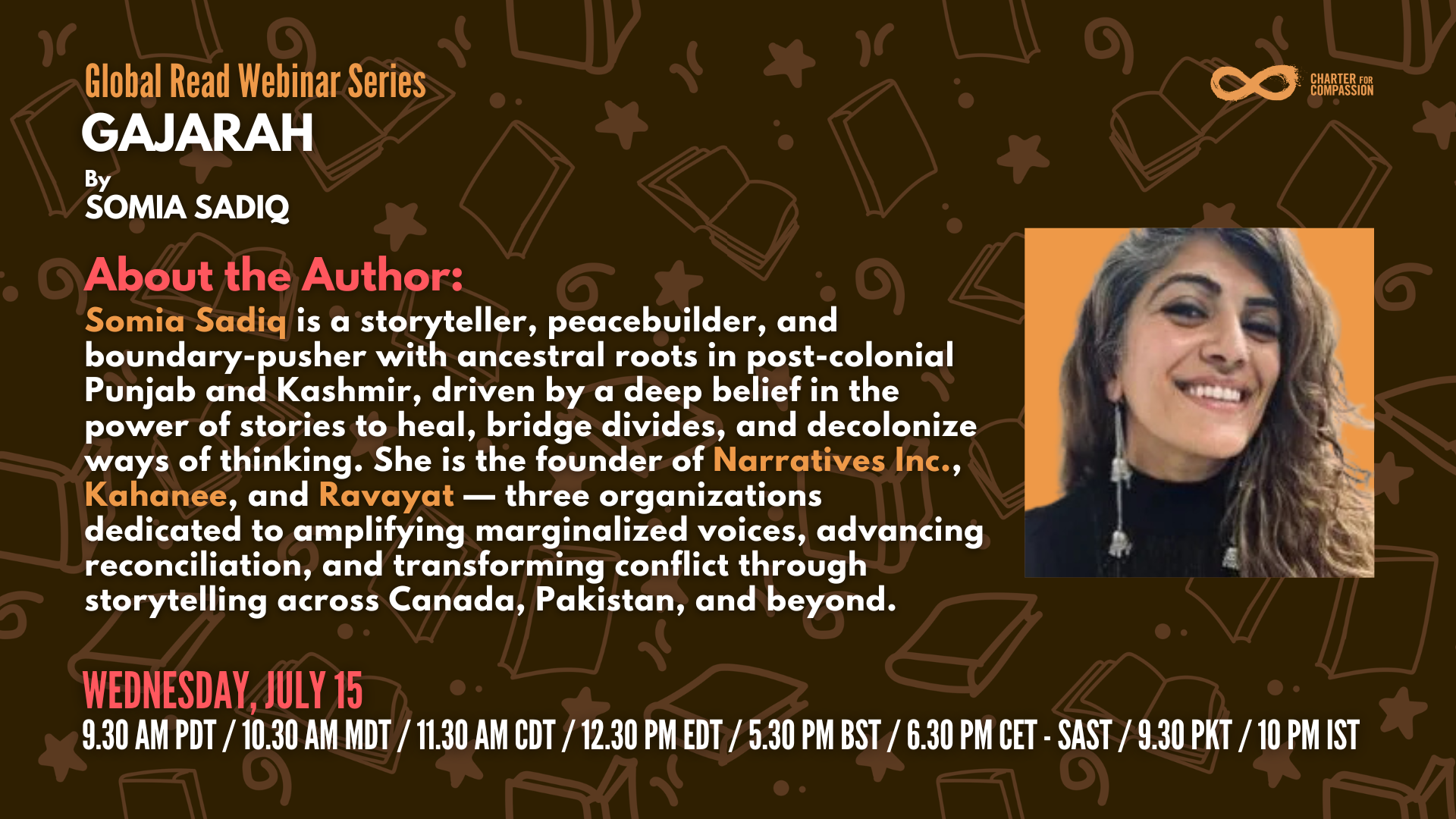
Known for her work as a peacebuilder and storyteller, Somia explores questions that resonate far beyond one woman's story. What does it mean to belong when home exists in more than one place? How do we carry inherited memories alongside our own? And how do we find the courage to heal without forgetting? Rather than offering easy answers, Gajarah invites readers to sit with these questions, discovering that healing can often emerge in what we give ourselves the power to choose to carry forward.
At the Charter for Compassion, we believe storytelling is one of the most powerful foundations of the path to empathy. Stories invite us beyond the surface, reminding us that every person carries histories we cannot immediately see, histories of love, displacement, resilience, loss, and hope. Gajarah is a beautiful invitation to listen more deeply, to honor the wisdom passed between generations, and to recognize the humanity we share despite the different paths we walk.
The closing stanzas of one of the many beautiful poems in the novel are as follows.
“…On my wrist rests my gajarah,
my motia, my gulab,
my genda
held in a thread that pulls them together,
as I walk through lands not mine,
with roots not mine, ways not mine,
that unfold before me, that undo me.
In each step, this place humbles me,
reminds me to be more human,
to carry pieces of many worlds,
to know that in these imperfect lands,
I find fragments of my own,
fragile, and fierce, and fully alive."
These lines serve as a beautiful reminder that we are shaped by every place that has welcomed us, every person who has loved us, and every experience that has transformed us. They speak to the beauty of carrying more than one home, more than one identity, and more than one story within us. They remind us that we, too, are shaped by the many threads of our families, cultures, languages, joys, heartbreaks, and the places we call home. Just as each flower contributes something unique to a gajarah, every culture, every community, and every individual adds to the rich tapestry of our human family. And that we become more whole by learning to hold one another's experiences alongside our own.
Perhaps compassion begins when we realize that none of us carries a single flower; we each carry a gajarah, woven from the many lives and places that have shaped us.
As we gather this month for our Global Read with Somia Sadiq, I hope you will join us in exploring the many threads woven throughout Gajarah.
Anum Mulla