
When: 7:00 PM — 9:00 PM EST / 8:00 AM — 10:00 AM JST (August 6)
Our global observance of Nuclear Prayer Days begins in Hiroshima at one of the most sacred moments in the modern history of humanity. The broadcast originates on August 6 at 8:15 a.m. Japan Standard Time—the exact moment, eighty-one years earlier, when the first atomic bomb used in war exploded over the city. For viewers in North America, this opening gathering begins at 7:00 p.m. Eastern Time on August 5, connecting us across time zones in a shared act of remembrance and hope.
Each year, August 6 is unlike any other day in Hiroshima. While daily life continues throughout the city, the rhythm of the day is transformed by memory. Schools devote the day to peace education, ensuring that each new generation learns not only the history of the atomic bombing but also its responsibility to build a more peaceful future. Residents and visitors from around the world make their way to Hiroshima Peace Memorial Park, where they gather in quiet reflection to honor those whose lives were forever changed on August 6, 1945.
At 8:15 a.m., the Peace Memorial Ceremony begins. As the Peace Bell rings and sirens sound throughout the city, tens of thousands of people fall into complete silence. For one minute, an entire city stands still. It is a silence that transcends language—a silence filled with remembrance, grief, gratitude, and renewed commitment. It is one of the most profound annual acts of collective reflection anywhere in the world.
The ceremony includes prayers, messages from civic and international leaders, testimony from Hibakusha—the survivors of the atomic bombing—and family members who continue to bear witness to the human cost of nuclear war. Children of Hiroshima also speak, sharing their hopes for a future free from violence and nuclear weapons. Following the Mayor's Peace Declaration, one thousand doves are released as symbols of peace, and the ceremony concludes with a 450-member chorus and wind ensemble performing the beloved "Hiroshima Peace Song."
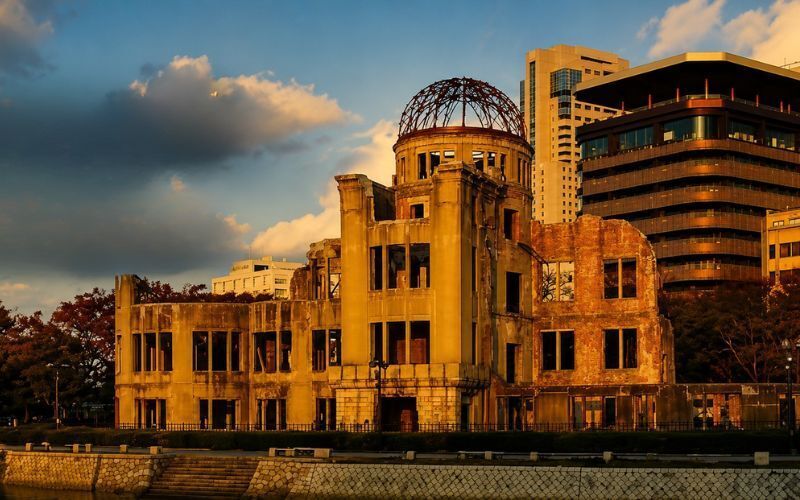
As evening falls, the city's remembrance continues with the Lantern Floating Ceremony. Thousands of softly illuminated lanterns are placed upon the Motoyasu River, each carrying prayers for those who perished and hopes for a peaceful future. Flowing silently beneath the Atomic Bomb Dome, the lanterns create one of the world's most moving expressions of remembrance and reconciliation.
This opening segment of Nuclear Prayer Days is coordinated by the Goi Peace Foundation, one of Japan's leading organizations dedicated to fostering a culture of peace. The Foundation traces its inspiration to Masahisa Goi (1916–1980), whose universal prayer, "May Peace Prevail on Earth," has become a global expression of humanity's shared longing for peace. Together with May Peace Prevail On Earth International, the movement has inspired the planting of more than 250,000 Peace Poles in communities throughout the world, each bearing the message of peace in multiple languages.
The Goi Peace Foundation holds Special Consultative Status with the United Nations Economic and Social Council (ECOSOC) and maintains official relations with UNESCO. Through international education initiatives, youth essay contests, leadership programs, and global partnerships, the Foundation works to cultivate a new generation of peacebuilders. Today, its work continues under the leadership of Masami Saionji, daughter of Masahisa Goi, and Hiroo Saionji, whose lifelong commitment to global peace has inspired communities on every continent.
It is especially fitting that our Nuclear Prayer Days begin in partnership with the Goi Peace Foundation. Like the Foundation's enduring message—May Peace Prevail on Earth—our own Nuclear Prayer calls us to remember the past, awaken our conscience in the present, and commit ourselves to creating a future in which nuclear weapons no longer threaten life on Earth.
As the Peace Bell rings in Hiroshima, may its sound reach every nation. May the silence observed in Peace Memorial Park become a moment of reflection for all humanity. And may our shared prayers become shared action, so that the tragedy remembered in Hiroshima and Nagasaki is never experienced again.