

On our 250th, America Must Choose Compassion
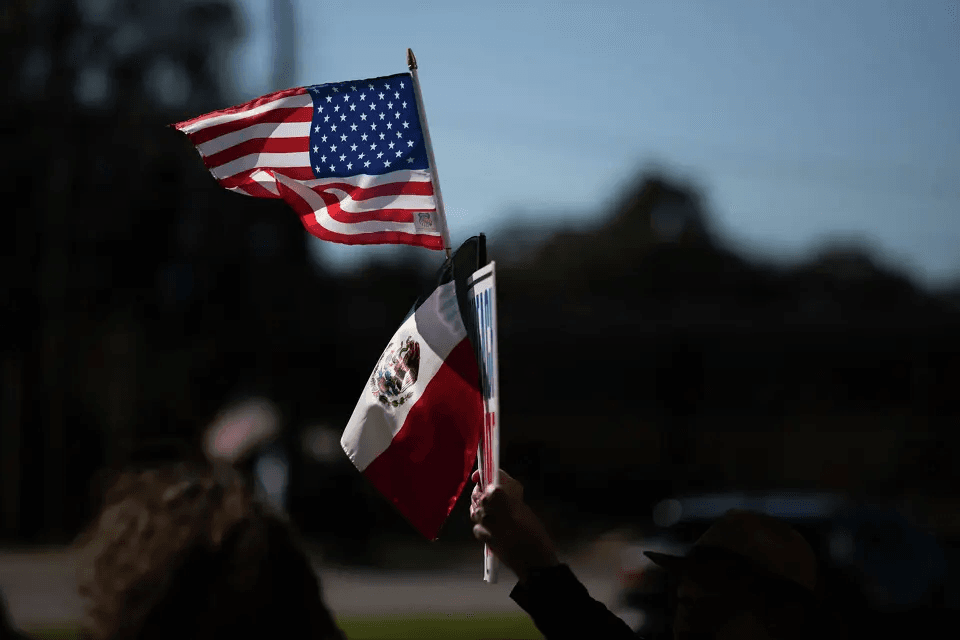
A protester holds the American flag and the Mexican flag. Many federal and state officials have shut their hearts to immigrants who have fled religious and political persecution, cartel violence and severe economic suffering, the Rev. Tim Anderson and the Rev. Jim Harrington write.
NurPhoto/NurPhoto via Getty Images.
By the Rev. Tim Anderson and the Rev. Jim Harrington, Guest columnists
As this nation marks its 250th anniversary, we are again in need of our “better angels.”
In his first inaugural address, Abraham Lincoln called on the country to maintain unity by heeding its better angels. His warning went unheeded, and the nation soon descended into the Civil War, the deadliest war in our nation’s history.
With great respect for the Americans who came before us, we must learn from their grave mistakes and choose a better way.
France gifted the Statue of Liberty to the United States to commemorate our first centennial and the abolition of slavery. The broken shackles at Lady Liberty’s feet represent the great ideal of freedom; the torch represents enlightenment, including the ideals of representative democracy. These are two of our better angels.
When the United States last celebrated a milestone anniversary, its bicentennial 50 years ago, we were beginning the resettlement of one million Vietnamese immigrants fleeing their country after the Vietnam War, in one of the largest exoduses in modern history.
Americans, through our churches, community groups and government support, showed great compassion in accommodating the new immigrants. While there were exceptions, many of us felt a moral responsibility to open our hearts and our country to them.
This year’s anniversary feels markedly different from the bicentennial. Many federal and state officials, with the backing of some judges, have shut their hearts to immigrants who have fled religious and political persecution, cartel violence and severe economic suffering.
Fair immigration laws, applied equitably, are of great importance. But we’re not trying to do that. We’re led by a president who vilifies immigrants with harsh language and disgraceful memes. The White House has expanded access to asylum for white South Africans while asylum applicants of color from other countries are routinely denied and deported.
Transactional Records Access Clearinghouse data show that most people detained over their immigration status have no criminal record, which belies the administration’s claim that its crackdown is directed primarily at criminals. We’ve seen agents detain clergy (including a nun on the way to church), physicians, teachers, and high school mariachi musicians in Texas. These are not criminals but respected individuals.
Immigrants who keep court dates on their path to asylum or legitimizing their legal status are obeying the law. But they are arrested and deported on a whim when they come to court. Our tax dollars are being used to imprison students, break up families and deport people who have been doing the jobs that Americans will not.
What has gone wrong with our country? Where is this hatred and injustice coming from? We can be a nation of enormous generosity. We helped rebuild Europe after World War II. Thereafter, various foreign aid programs showcased our commitment to making the global community healthier, better fed and immunized. The administration abruptly slashed these life-saving efforts in 2025, worsening the humanitarian crises affecting millions.
Ironically, some of this hatred, malevolence and selfishness can be laid at the feet of Christian nationalism. This movement isn’t based on the Gospel of Jesus, but upon societal conformity and control. We are not alone in our view. Pope Leo XIV and other religious leaders have also condemned Christian nationalism.
Generosity and compassion were at play with the Vietnamese immigrants who fled to our country 50 years ago. Our current government leaders reject that compassion and mock it. Even worse, they stir up hatred among people rather than helping craft civil society.
What kind of United States do we want to pass on? Our patriotic duty to “create a more perfect union” compels us to heed our better angels.
The Rev. Tim Anderson is the executive director of Austin City Lutherans. The Rev. Jim Harrington is with St. James’ Episcopal Church, Austin.
America's 250th is a test of whether we'll heed our better angels
See article from source:
America's 250th is a test of whether we'll heed our better angels