
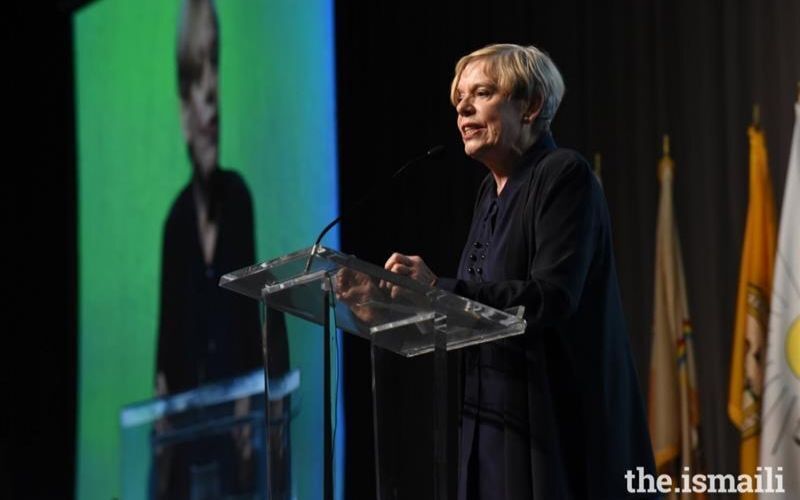
Karen Armstrong, founder of the Charter for Compassion, is one of the world’s most influential voices on religion, ethics, and compassion. The essence of her work lies in promoting understanding, empathy, and the practice of compassion across religious and cultural boundaries. She urges us to study religions with humility, to uncover the shared values that bind us together, and to embrace the Golden Rule—treating others as we would wish to be treated—as a foundation for peace and human flourishing.
Armstrong’s writings highlight the comparative study of religions, showing that beneath their differences lie common quests for meaning, purpose, and transcendence. She emphasizes a historical and contextual approach to understanding traditions, encouraging readers to resist simplistic interpretations and to see religions within the social, cultural, and political worlds in which they arose.
Her vision champions compassion as the central ethical principle of faith, critiques fundamentalism in all forms, and calls for interfaith dialogue as a way to bridge divides, dispel stereotypes, and promote harmony. She also elevates the mystical and spiritual dimensions of faith, reminding us that religious experience can transcend dogma and connect us with the sacred mystery of life.
Importantly, Armstrong does not limit her insights to the religious sphere. She speaks powerfully about the role of secular ethics, affirming that compassion is not only for the faithful but is an essential moral framework for all who care about justice, dignity, and the well-being of humanity. Her writings are accessible, bridging the gap between scholarship and everyday life, and have invited countless readers into a deeper and more compassionate engagement with the world.
In recent years, Armstrong has turned her attention urgently to nature and the environment. In Sacred Nature, she argues that spirituality is incomplete without reverence for the earth. Ancient traditions viewed the natural world as sacred, alive, and worthy of care; rediscovering this reverence, she insists, is essential for addressing the climate crisis and renewing our bond with the planet. Just as compassion calls us to care for one another, it must also call us to care for the earth itself.
Her message is clear: compassion is a luminous, dynamic force that can heal divisions between peoples—and also between humanity and the natural world. By weaving together love for one another and reverence for nature, Armstrong challenges us to reimagine spirituality as a path toward collective survival, unity, and hope.