
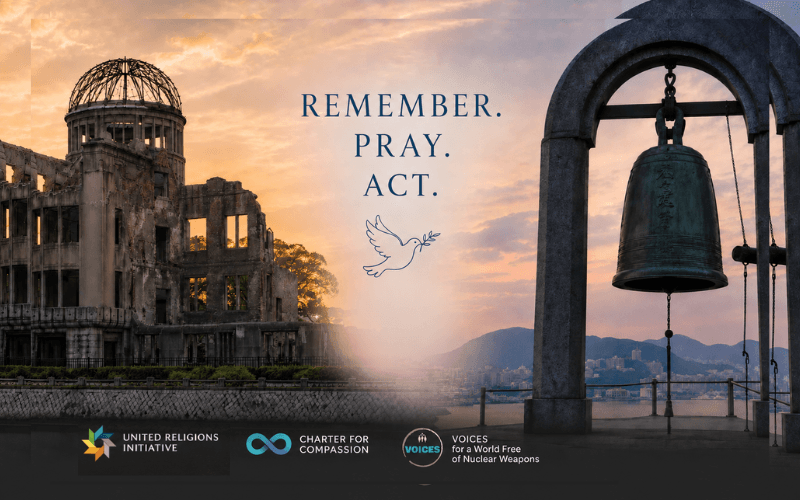
Hiroshima & Nagasaki: Global Days of Action and Prayer
Live from Hiroshima
World Peace Prayer Ceremony
Global Silent Minute
USA, August 5th @ 7:00 PM - 9:30 PM EDT
Japan, August 6th @ 8:00 AM - 10:30 AM
Hiroshima members of May Peace Prevail On Earth International invite you to a live broadcast from Hiroshima Peace Park to commemorate the 81st anniversary of the atomic bomb which fell on the city. The Global Silent Minute will be observed to mark the exact moment the atomic bomb was dropped on Hiroshima as we join the citizens of Japan who stop for one minute of silence to offer prayers for everlasting peace and a world without nuclear weapons. The live broadcast will feature a World Peace Prayer Flag Ceremony offered at ground zero in front of the atomic bomb dome as prayers for peace to prevail will be offered to honor every world nation. Fumi Johns Stewart, Master of Ceremonies will introduce special guests including Kathleen and Sarah Burkinshaw, second and third generation Hibakusha atomic bomb survivors, Monica Willard from Voices for a World Free of Nuclear Weapons, Dot Maver - Global Silent Minute, Kristin Hoffmann singer songwriter who will close the program along with music and sacred temple dancing.
May Peace Prevail On Earth.
Check all links for all activities
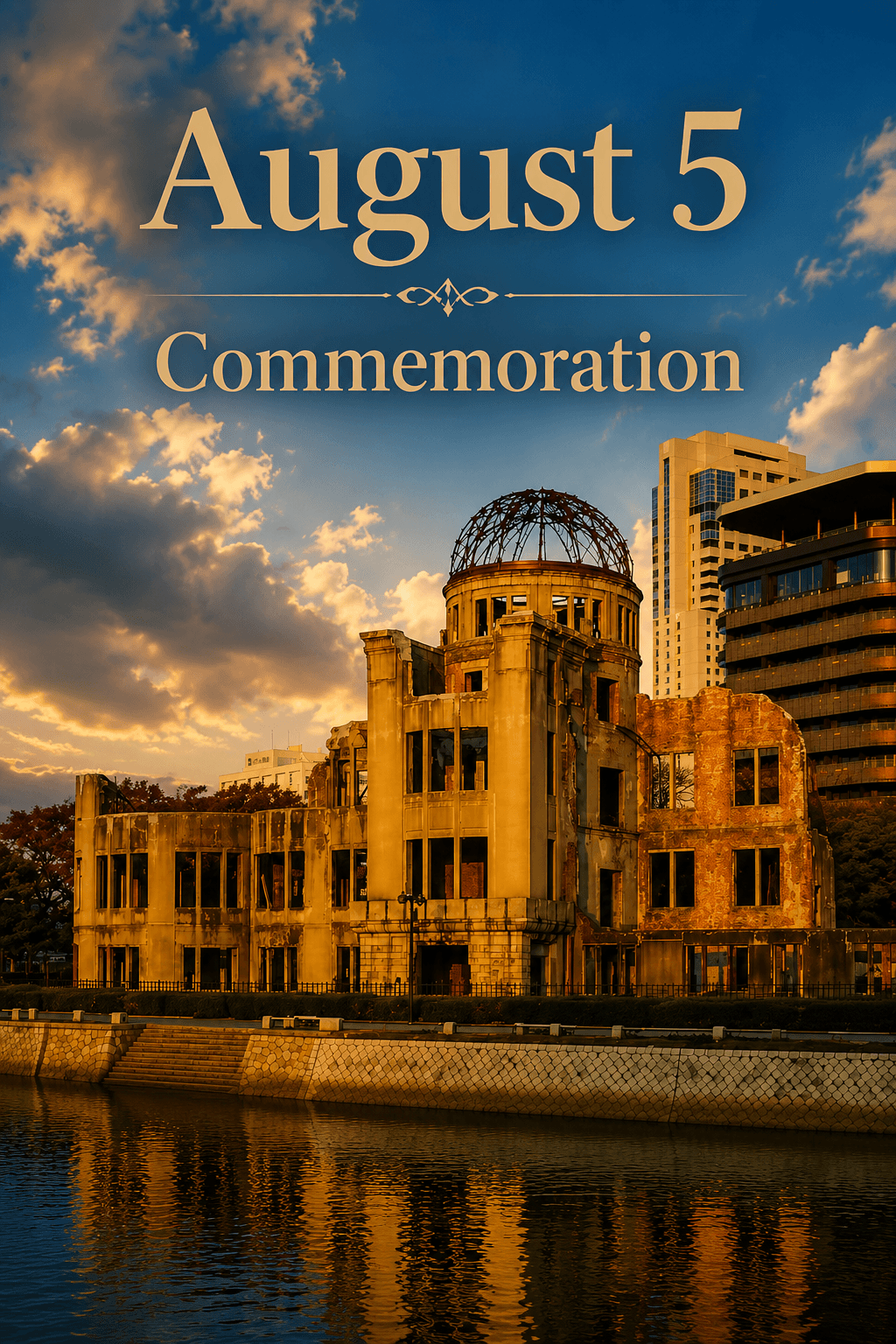
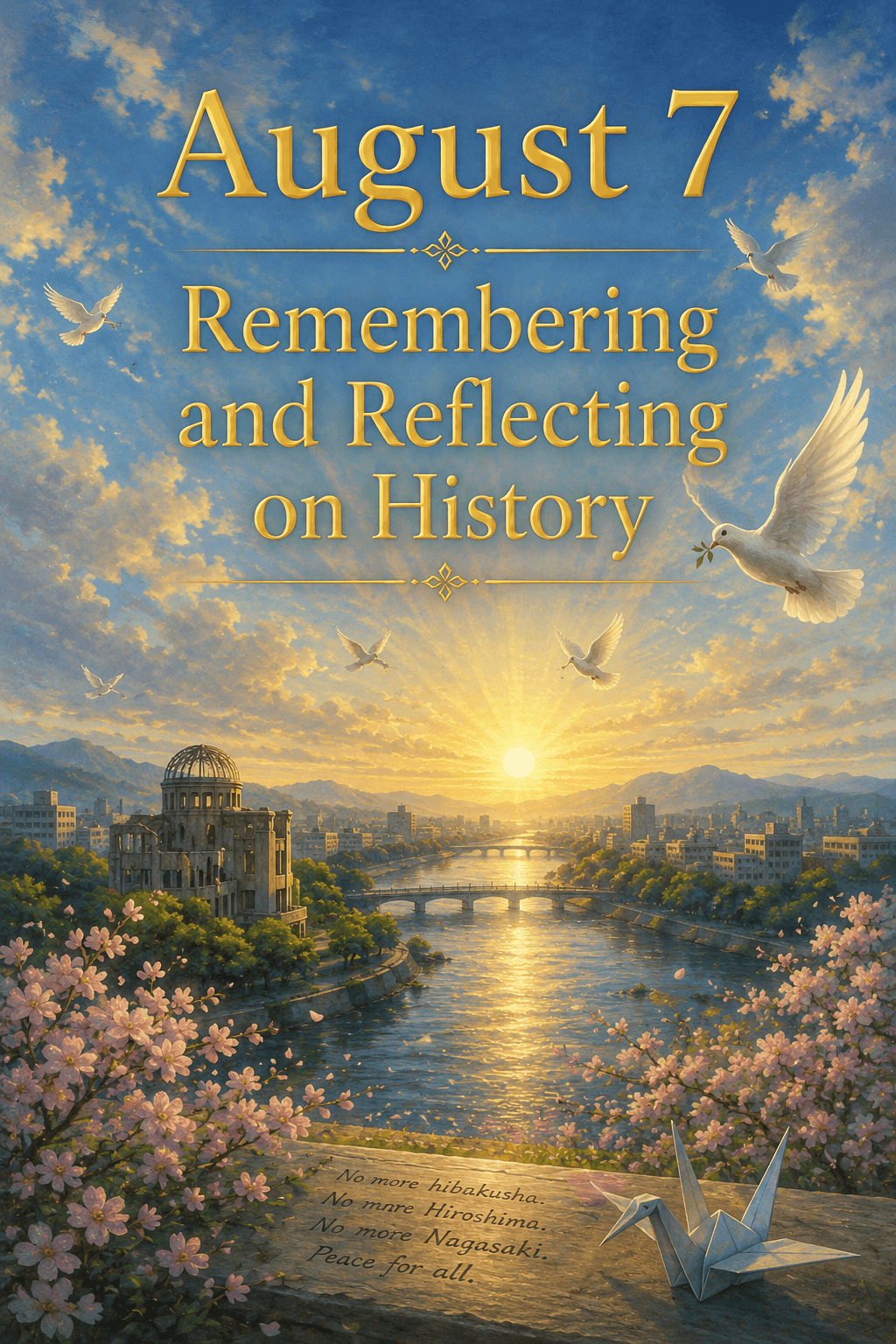
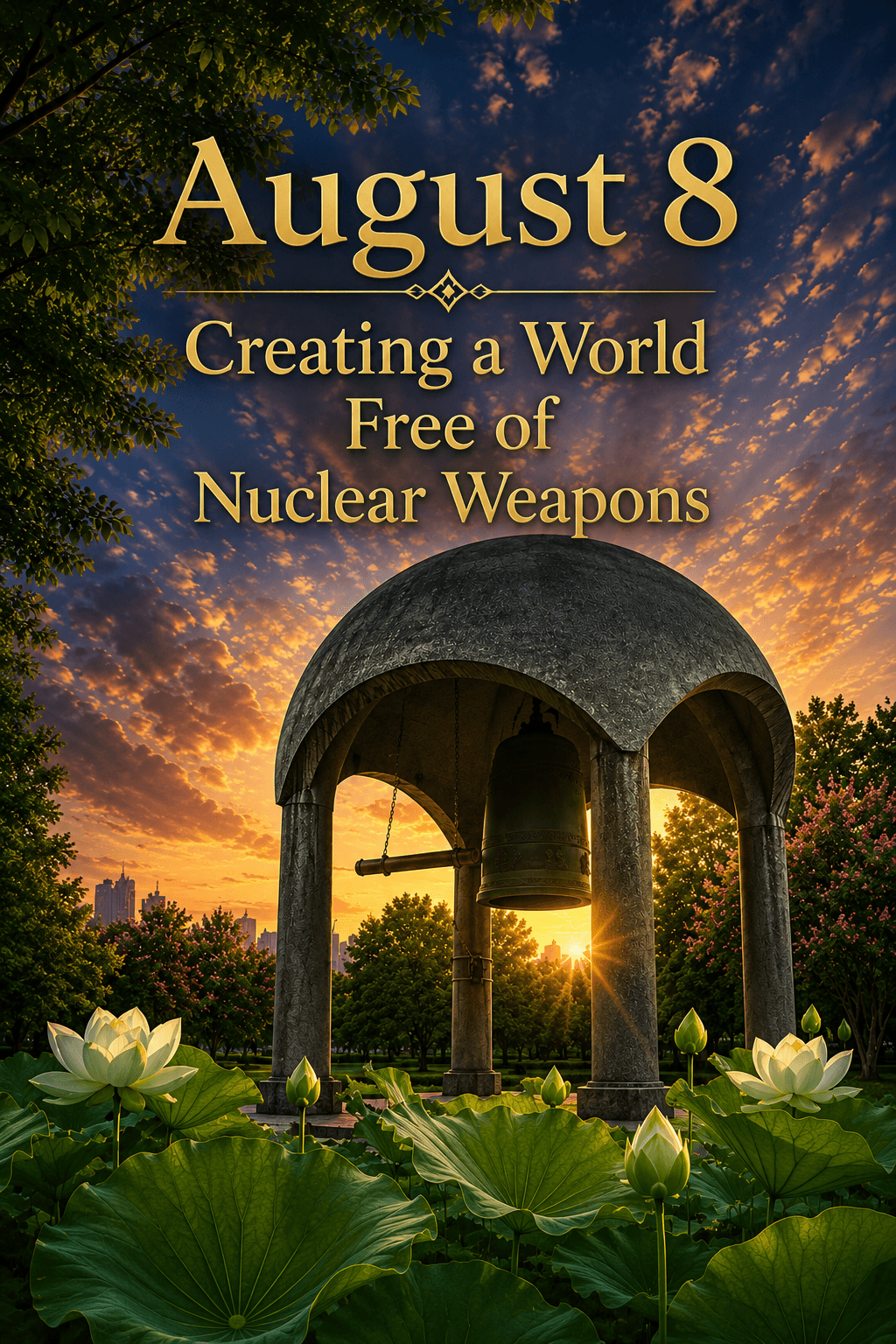
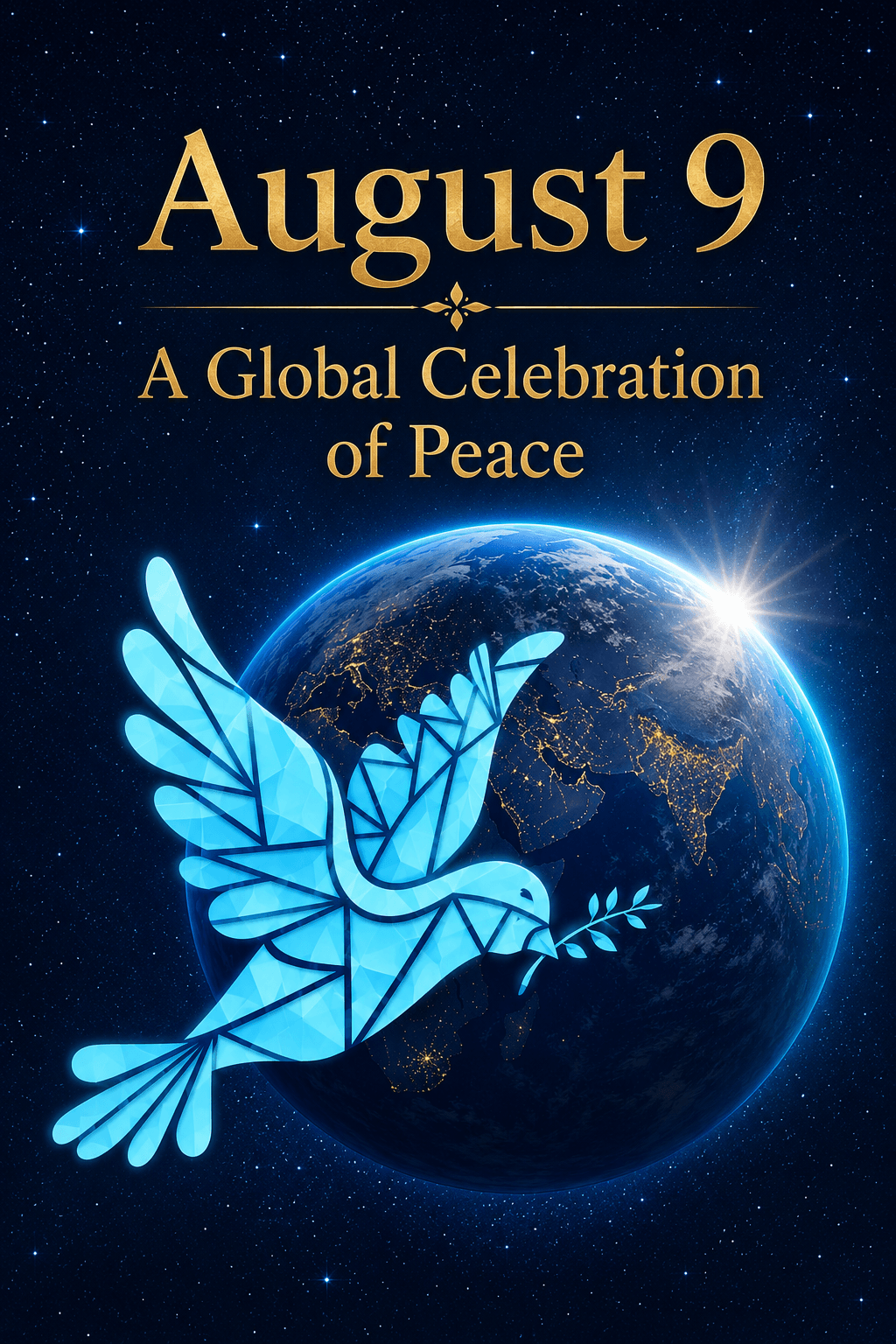
Eighty-one years ago, humanity crossed a threshold from which there could be no return. The atomic bombings of Hiroshima and Nagasaki forever changed our understanding of war, power, security, and our shared future. In an instant, entire communities were devastated. Families were torn apart. Lives, dreams, and generations were forever altered.
Yet from the ashes of unimaginable destruction emerged a powerful and enduring call:
Never Again.
From August 5 through August 9, communities around the world will gather across time zones, cultures, generations, and faith traditions to commemorate the atomic bombings of Hiroshima and Nagasaki, to honor the lives forever changed, and to renew a shared global commitment to building a world free of nuclear weapons.
These Global Days of Action and Prayer invite us to remember not only what happened, but what remains possible.
This observance unfolds as a deliberate global journey, moving geographically and morally around the world. Beginning in the Pacific and traveling across continents, each region will bring its own voices, wisdom traditions, stories, music, prayers, and commitments to a shared global conversation.
Anchoring the entire observance is the Nuclear Prayer—a common spiritual and ethical center that transcends religious, cultural, and political boundaries. It reminds us that the elimination of nuclear weapons is not simply a political issue. It is a human issue. A moral issue. A spiritual issue.
This program is not a conference. It is not a performance. It is a shared global act of remembrance, prayer, and moral resolve.
Throughout these days, participants will encounter the voices of survivors, youth leaders, faith communities, peace builders, artists, scientists, educators, and advocates who continue to carry forward the work of building a more peaceful world.
Together, we will reflect on the lessons of history, honor those who suffered, confront the realities of the present. And together, we will imagine a different future.
The design of this commemoration intentionally creates spaces for pause, reflection, local gatherings, prayer, conversation, and action. These moments of silence and contemplation are as important as the formal presentations themselves. They allow us to absorb the weight of history while renewing our commitment to the future.
As the world moves from one region to another, a shared thread of remembrance and hope will connect us. And ultimately, an invitation to help write a new chapter in humanity's story—one no longer defined by the threat of nuclear annihilation, but by cooperation, compassion, and the courage to choose life.
May these days strengthen our resolve, deepen our humanity, and remind us that the future is not something that happens to us.
It is something we create together.
Welcome to Hiroshima & Nagasaki: Global Days of Action and Prayer.
Why We Gather
Eighty-one years have passed since the atomic bombings of Hiroshima and Nagasaki, yet the questions raised by those events remain profoundly relevant today.
The destruction of two cities in August 1945 altered the course of history. It revealed both the extraordinary power of human ingenuity and the devastating consequences of its misuse. For the first time, humanity possessed the ability to destroy itself on an unimaginable scale.
The survivors of Hiroshima and Nagasaki—the hibakusha—have spent decades ensuring that the world does not forget what happened. Their testimony is not rooted in anger or blame. Instead, it is a witness to the value of human life and a plea that no one, anywhere, should ever experience such suffering again.
Remembering Hiroshima and Nagasaki is not simply an act of looking backward. It is an opportunity to reflect on the choices that shape our future.
Today, nuclear weapons still exist. Nations continue to invest vast resources in systems capable of causing catastrophic destruction. At the same time, our world faces challenges that no nation can solve alone—climate change, poverty, displacement, conflict, and growing divisions within and between societies.
These realities invite us to ask difficult but necessary questions. What creates genuine security? Can peace be built upon fear? What responsibilities do we share as members of a single human family?
The lessons of Hiroshima and Nagasaki point us toward a different way of thinking. They remind us that lasting peace is not created through domination or threats, but through dialogue, cooperation, understanding, and a recognition of our common humanity.
This is why people from many cultures, nations, and faith traditions come together during these Global Days of Action and Prayer. To honor those who suffered. to learn from history, to listen to the voices of survivors and peace builders, to support a new generation of leaders committed to a world free of nuclear weapons and we come to renew our commitment to building a future grounded in compassion, justice, and peace.
Throughout these days, we will hear stories, prayers, reflections, music, and calls to action from around the world. Each contribution becomes part of a larger global conversation—one that affirms the dignity of every human life and the possibility of a future beyond nuclear fear.
The future is not predetermined. It will be shaped by the choices we make, the values we embrace, and the courage we find to act together.
May these days strengthen our resolve, deepen our understanding, and inspire us to become active participants in creating a more peaceful and compassionate world.
For in remembering Hiroshima and Nagasaki, we are also choosing what kind of future we wish to create.