
Action Planning through the New World Game
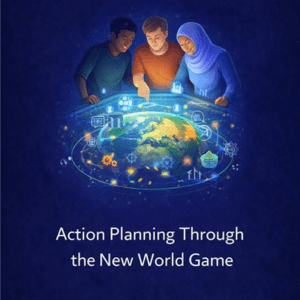
The Compassion Transformation Institute mentors teams through the New World Game using a structured yet flexible pathway. While the platform provides a shared process, mentoring ensures that each stage is grounded in local reality, lived experience, and community-defined priorities.
1. Grounding in Purpose and Personal Experience
The process begins with people—not problems. Teams are invited to reflect on their personal experiences, roles, and motivations, and to connect these to the community’s broader hopes and concerns. This grounding step ensures that the work remains human-centered and values-driven rather than abstract or technical.
2. Naming the Core Challenge or Opportunity
With mentor support, teams identify a shared challenge or opportunity that matters deeply to them. This may relate to social cohesion, youth engagement, education, health, housing, environmental care, or civic trust. The emphasis is on clarity and focus, avoiding the tendency to tackle everything at once.
3. Mapping Needs, Assets, and Interdependencies
Using the New World Game platform, participants map the landscape surrounding the issue—community needs, existing assets, stakeholders, constraints, and interdependencies. This systems view helps teams see how different factors interact and where leverage points for change may exist.
4. Exploring Possibilities and Generating Solutions
Teams then move into creative exploration. In small, diverse groups, participants generate possible responses—both conventional and imaginative—drawing on local knowledge, lived experience, and the collective intelligence of the group. Mentors help teams suspend premature judgment and remain open to multiple pathways forward.
5. Weighing and Refining Options
The platform supports teams in testing ideas against real-world criteria: feasibility, impact, alignment with values, available resources, and community readiness. This stage helps participants learn how to evaluate possibilities collaboratively, balancing aspiration with practicality.
6. Designing Coordinated Actions
Promising ideas are translated into concrete actions. Teams clarify roles, timelines, partnerships, and next steps. Rather than assigning responsibility to a single leader, the process encourages shared ownership and distributed leadership, strengthening commitment and follow-through.
7. Learning, Adapting, and Iterating
The New World Game emphasizes learning-in-action. Teams are mentored to reflect on what works, what doesn’t, and what needs adjustment. This iterative mindset helps communities stay responsive, resilient, and willing to evolve rather than becoming discouraged by setbacks.
8. Integrating Insights into Ongoing Compassionate Practice
Finally, teams explore how insights from the Game can be embedded into ongoing community work—governance structures, partnerships, educational efforts, or compassionate community initiatives. The goal is not a one-time experience, but a lasting shift in how communities collaborate and problem-solve.
A Shared Ethos of Collaboration and Hope
The New World Game—developed by David Gershon—is grounded in the belief that ordinary people, working together with intention and care, can address extraordinary challenges. When paired with mentoring from the Compassion Transformation Institute, the platform becomes a powerful catalyst for practical compassion, civic engagement, and community-led transformation.
If your team is interested in exploring how the New World Game training might support your community or organization, we invite you to begin a conversation. Please contact Marilyn to discuss possibilities and next steps.